Dr. Wilson’s Insights

Selected passages from Dr. Wilson’s professional presentation:

A selection of observations, reflections, and clinical experiences recorded by Dr. Everett E. Wilson.

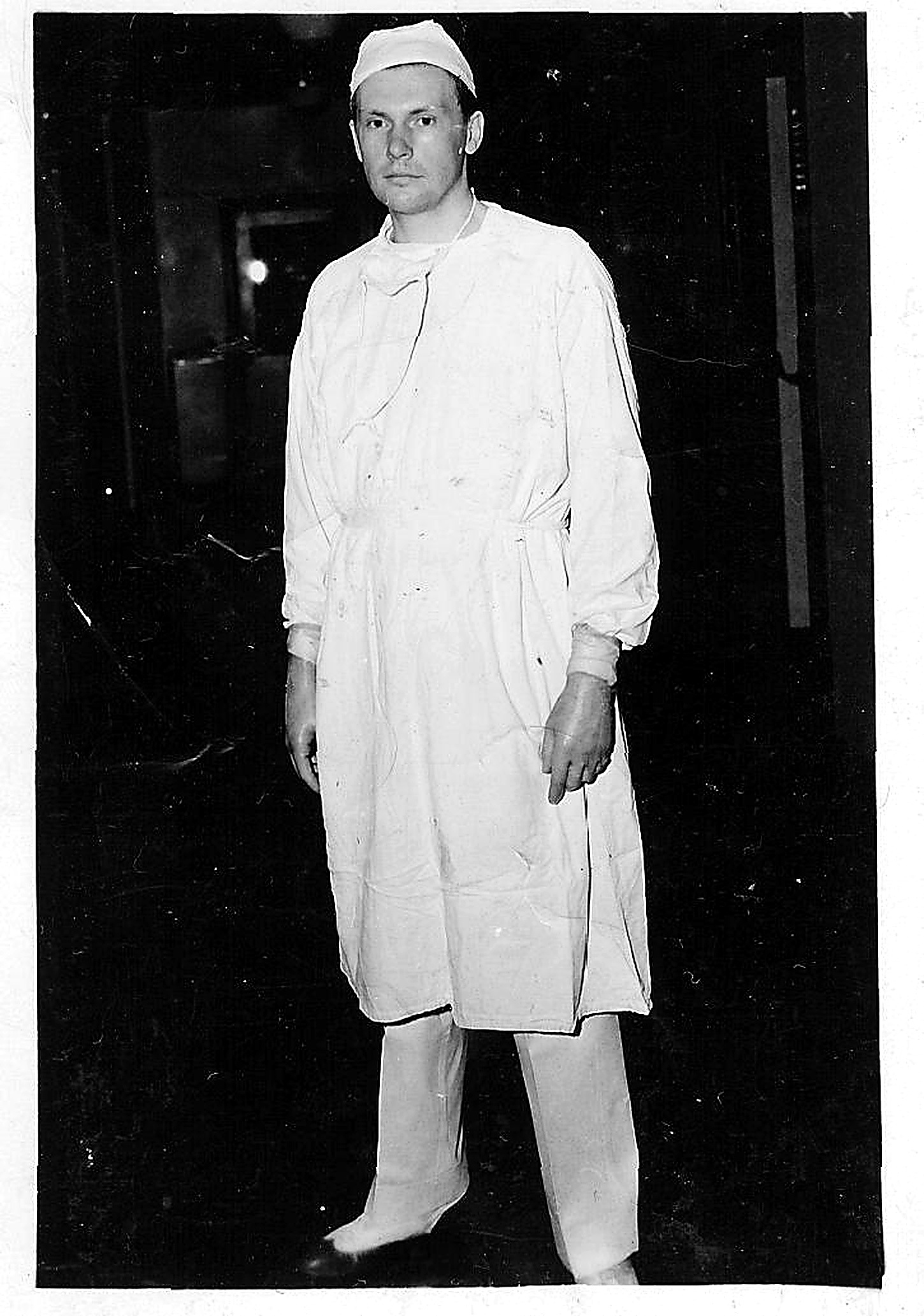
Dr. E. E. Wilson as an intern, 1947
Clinical practice (Dr. E. E. Wilson as an intern 1947)
01 · Clinical Practice
Recently I reached my 82nd birthday (in 2001). Understandably, many of you are probably thinking to yourselves, “Why is that old guy telling us this?” The answer: To share with you what experience clinical practice has taught me when academia had nothing to give me.

02 · Clinical Practice
The purpose of this presentation (to a physician’s conference) is to offer you an alternative to the management of your patients presenting with Macular Degeneration. You will be honestly able to offer these patients some hope for regaining some functional vision.
03 · Patience
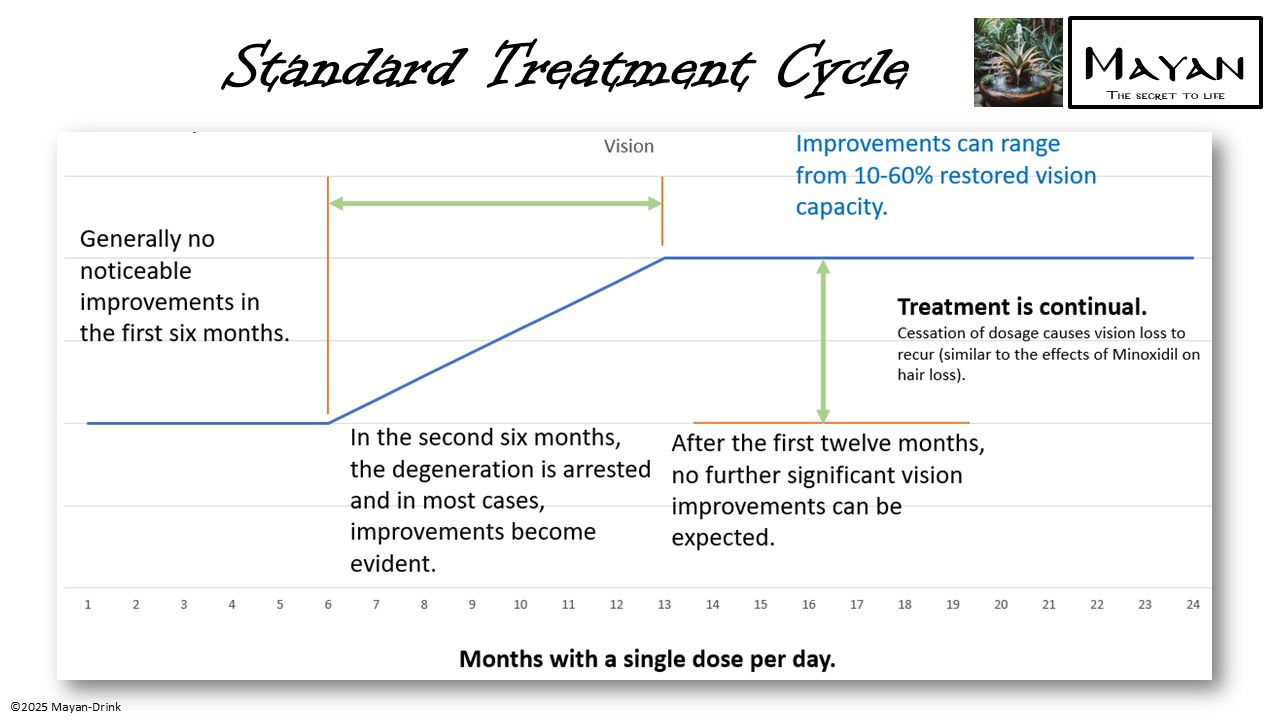
My clinical observations as to the management of macular degeneration differ from the standard approach. I add a thorough discussion of no promises, but what the patient might legitimately expect, based on my experience with other patients taking the same formula for some time. The progress is slow and faithful compliance is important.
04 · Hope
One observation I would like to make is that it seems not to matter how old or how severe the loss of vision, with faithful attention to the program, improvement can be noted.
Hope
Hope
Standard Treatment Cycle
05 · Hope
Another observation is that the formula seems to benefit both wet and dry types of Macular Degeneration.
06 · Hope
I have to confess that I have done ophthalmoscopy in patients with such proliferation of drusen that I would say to myself, “this will not work,” only to have those patients return in six months and have improved visual acuity.
07 · Worst-Case Scenario
Even when no progress may be noted for six months, the patient showing no change at that time in effect is showing no further loss of vision. This is an achievement in and of itself. “The worst that can happen is that they will have lost no more vision.”
Worst-case scenario
Worst-case scenario
08 · Traumatic Head Injuries
Most of you are too young to remember that years ago I wrote a paper describing the cause and results of treating over 100 patients (children) having amblyopia with manipulative correction of the Atlanto-occipital lesions on the concomitant side.
09 · Traumatic Head Injuries
Curiously and parenthetically, I commonly find a history of falls or other trauma to the head and neck areas in a large percentage of our Macular Degeneration cases. I feel that correction of these lesions should be part of the therapeutic regime.
10 · Traumatic Head Injuries
Case in point: a 44 year old lady from LA had been diagnosed with MD at age 34. Palpation of her neck left the impression a truck had run over it. Her history indicated that she did not grow up in LA, but in Green Bay, Wisconsin where as a young girl she loved to ice skate, taking many, many falls. I referred her to her DC in LA for additional treatment. The last I heard, she had 20/25 VA-OU.
Traumatic head injuries
11 · Smoking
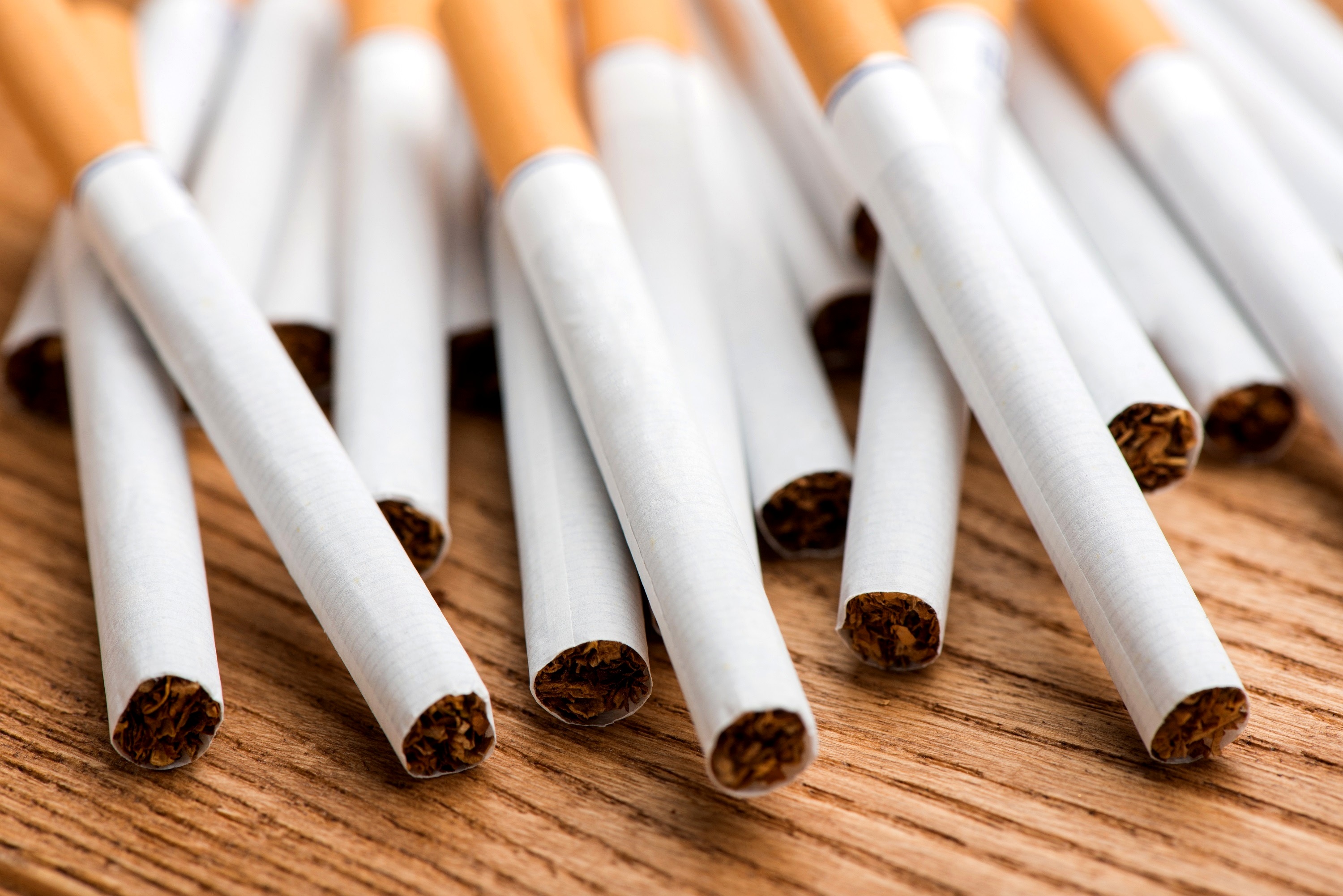
My two worst enemies are smoking and stress. Enemies to the healing process: Smoking; Cynicism; High Stress Situations: Loss of a loved one, loss of job, cancer diagnosis, etc. “Either quit smoking or we don’t have a deal.”
12 · Smoking
One ninety-year-old lady presented recently with advanced visual loss. On examination of the attenuated and sclerotic retinal vasculature, I asked her if she smoked. I used to be gentle with patients and say “I think you should quit smoking.” Now I say, “Either quit smoking or we don’t have a deal.”
Smoking
Smoking
13 · Stress
Ten patients over the last several years were showing positive gains in visual acuity by taking the herbal remedy formula and, at their various follow-up appointments, each VA took a nose dive. It turns out that each patient was suffering a stress-crisis.
14 · Stress
Clinically, it would appear that the attenuation of the retinal vasculature brought on by the hyper-adrenalism of stress is as destructive to one’s vision in Macular Degeneration as smoking.
Stress
Stress
15 · A Nutritional Approach
Put very simply, using herbs, as I have during this past decade, is nothing more than adopting a nutritional approach to the treatment of Macular Degeneration. At first my impression for why it was reversing visual loss was that it was effective in supplying better circulation peripherally to the body and thus better nutrition to the retinal tissue.
16 · A Nutritional Approach
With more time and experience, I came to draw another conclusion about how the formula worked. Because it took so much time and appeared to have therapeutic benefits in other neurological cases, I decided it must be that the formula worked by providing nutrition to nerve cells. A patho-physiologist may someday provide the answer.
A nutritional approach
Historical material from Dr. Wilson’s presentation. The statements reflect his recorded views and experiences and are not independently verified medical claims.